
Why Prime Assets Continue to Attract Global Capital
As geopolitical tensions escalated in March 2026, including renewed friction involving Iran and the United States, attention has shifted back to a familiar question: how resilient is global real estate in periods of uncertainty?
So far, the answer is not retreat, but repositioning.
Across global markets, institutional capital continues to deploy, but with a clearer bias toward quality, liquidity, and income durability. The Middle East, and Dubai in particular, remains part of that story, though in a more selective and segmented way than some commentary suggests.
Long-Term Capital Is Staying the Course
Recent public remarks from Brookfield Asset Management leadership indicate that geopolitical developments have not materially disrupted investment activity. This is consistent with the firm’s long-standing approach: short-term volatility is not, on its own, a reason to pause deployment.
At a broader level, Brookfield’s communications continue to emphasize disciplined, long-term compounding across real assets such as infrastructure, logistics, and income-producing real estate. The implication is not that risk is ignored, but that it is absorbed within a longer investment horizon.
That distinction matters. Capital is still moving, but it is doing so with underwriting discipline and a preference for assets that can perform through cycles.
A Market Reset, Not a Rebound
From an advisory standpoint, JLL describes the current phase as a transition into a new cycle rather than a simple recovery.
Recent outlook material points to improving pricing clarity and a gradual return of liquidity. At the same time, the emphasis is firmly on selectivity. Capital is concentrating in:
- Prime, well-located assets
- Sectors with stable or growing income
- Markets with transparency and depth of demand
This reflects a repricing process that has already occurred in many segments. The result is not a broad-based surge in activity, but a more disciplined market where only certain assets meet institutional thresholds.
Dubai: Strong Activity, More Nuance
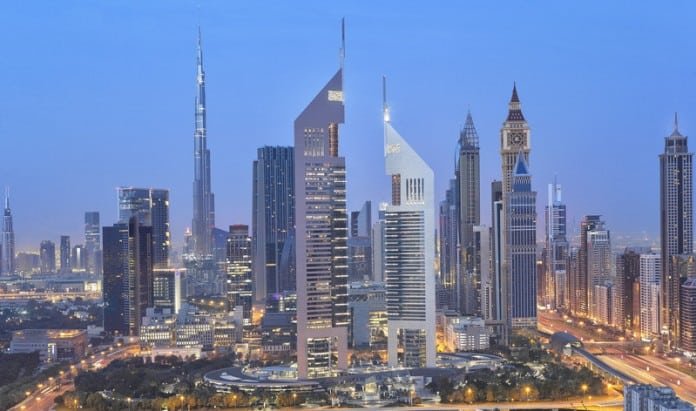
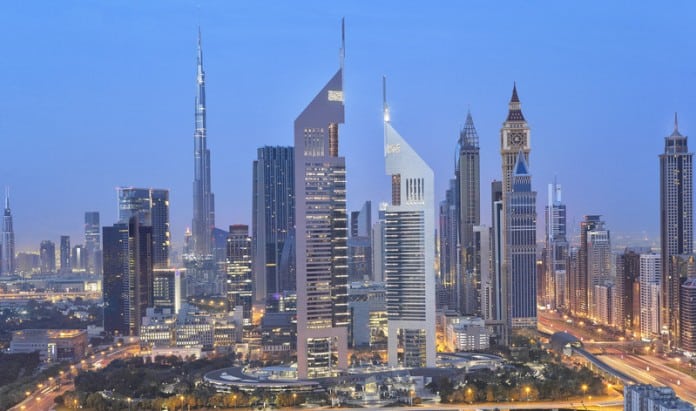
Dubai continues to record transaction activity even amid global uncertainty, and prime segments have led performance. That supports the view that the city remains attractive to international capital.
However, the full picture is more nuanced.
- A significant supply pipeline is set to deliver over the coming years
- Performance is increasingly two-speed, with prime assets diverging from mid-market segments
- Market momentum is moderating, shifting from rapid growth to a more measured pace
These factors do not undermine the investment case, but they do shape it. Investors are becoming more selective on location, product, and pricing, rather than treating the market as uniformly strong.
What This Means for Capital Allocation
Taken together, the signals from global investors and advisors point in the same direction, with important caveats.
Institutional capital is still active. The Middle East remains on allocation maps. But the conditions have changed.
- Capital is concentrating, not expanding indiscriminately
- Prime assets are capturing disproportionate demand
- Income visibility and asset quality are central to decision-making
- Volatility is creating entry points, but not across all segments
The core thesis holds: high-quality real estate continues to attract global capital, even in a volatile geopolitical environment.
But the details matter.
This is no longer a broad upswing. It is a more selective, performance-driven cycle where capital is precise about where it goes and why. Dubai remains a beneficiary of that shift, particularly in its prime segments, but it is not immune to supply dynamics or changing market tempo.
In short, capital is still flowing, just more carefully than before.