
“I know one person who has already cancelled their trip to Mipim,” one property lawyer told Property Week last Thursday, following the US attack on Iran.
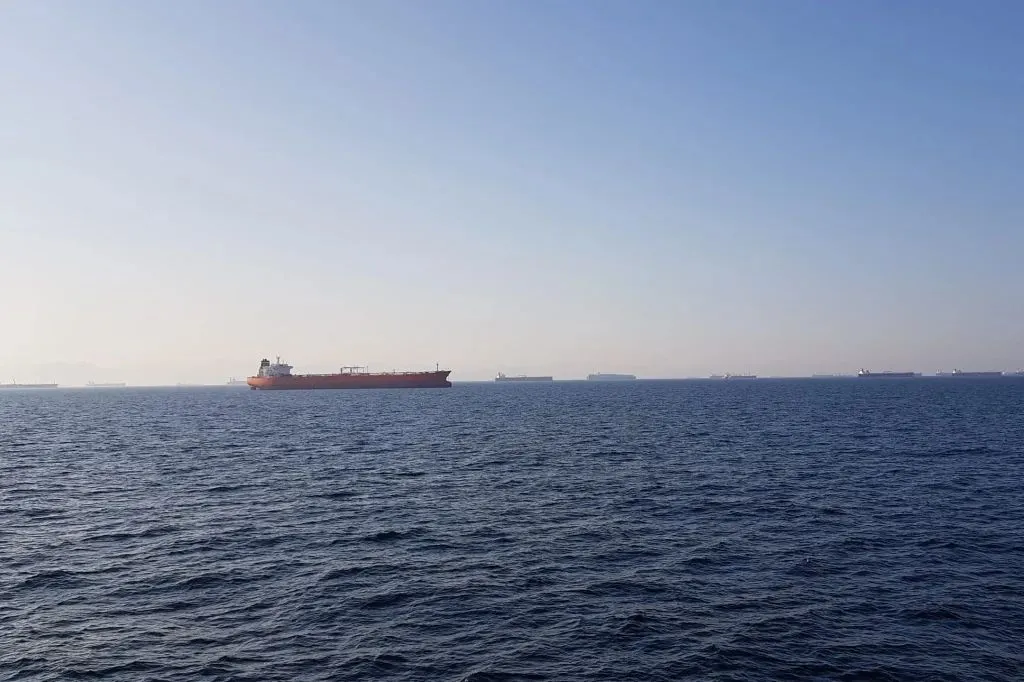
Off course: Iran’s closure of major shipping lane the Strait of Hormuz will cause massive trade disruption
Israel and the US started bombing the country on 28 February and, in response, missiles and drones from Iran hit apartment blocks in Dubai and major global airports in Qatar and Kuwait.
The humanitarian, political and economic ripples from the crisis that erupted in the Gulf with the launch of US operation ‘Epic Fury’ are being felt worldwide. For the UK property industry, the war is expected to have an impact on costs and investment decisions.
“If the conflict continues for weeks and months, the impact on oil and gas prices and disruption to supply chains are likely to mean a rebound in inflation and make it much harder to bring interest rates down as quickly as hoped,” says Melanie Leech, chief executive of the British Property Federation (BPF).
“This in turn would impact investment decisions and development viability. There is huge uncertainty right now and many businesses will be waiting to see how the situation evolves as it becomes clearer what level of economic shock we will see.”
An inflationary spike is expected to lead the Bank of England to press pause on any further interest rate cuts, which had been priced in by many in the market.
If the conflict continues for weeks, it’s likely to mean a rebound in inflation
Melanie Leech, BPF
“Property in the UK has really danced to the interest rate tune for the past three or four years now,” says Oli Creasey, head of property research at Quilter Cheviot. He adds that while 10 days ago people were expecting two further rate cuts this year, “now you are looking at none”.
He adds: “It’s hard to quantify the impact – if you look at shares of REITs, they are down around 9% on the week and it’s difficult to know if that is an under- or over-reaction.”
According to Creasey, whenever the interest rate environment improves, property is slow to absorb the changes, but when it deteriorates, the downside is very quickly “priced in”.
“The past 18 months have seen a property market recovery, but it is a fragile one – it’s not like we’re off to the races,” he says. “The office market is fine, but worried about AI. Retail is fine, but worried about employment and wage growth.”
Housebuilders’ stocks are also expected to be affected by the crisis. Many major players in the sector had expected inflation to remain stable this year, but the latest Middle East conflict may change that outlook.
Supporting Middle East projects
The UK real estate sector specialises in supporting major construction projects in the Middle East. Consultants such as Arup and architecture practices such as Foster + Partners, Grimshaw and Zaha Hadid have worked extensively in the region, while Savills has offices in Dubai, Oman, Saudi Arabia, Abu Dhabi and Bahrain. Having employees stuck in the region is a major concern for these firms. A spokesperson for Savills says it is encouraged that business has continued where possible for its 800 staff across the Middle East. They add that sentiment on the ground “is fairly positive due to a strong government response but, fundamentally, it’s too early to say what the medium- to long-term impact will be”.
One senior member of a major UK property consultant adds: “We have 1,200 people in the Middle East and are watching carefully, as if the disruption lasts, it will have a huge impact on our business, investment will falter and, if we have to bring those expats home, it will be total chaos.
“[In the UK], I think the forward wave of project fund commitments we were expecting in Q2 will not materialise; lots of projects in the PBSA [purpose-built student accommodation] sector were waiting for a button push from investors that was reliant on interest rates coming down. I don’t think projects [under way] will pause, but people will be very nervous about starting new work.”
The unknowns are the biggest issue. It is clearly still very early days
Noble Francis, CPA
Meanwhile, the effect of the conflict on exports of oil – and other oil- or gas-derived products – are a key issue. Taking just oil, the US attack on Iran has caused the largest supply shock in history in terms of volumes alone, with the production of an estimated 16 million to 20 million barrels per day lost from global output. This is far higher than the 5.6-million-barrels-per-day impact at the height of the Iranian revolution in 1978 and represents 20% of global oil supply currently in limbo.
The Iranian government has indicated plans to keep the Strait of Hormuz, a narrow choke point south of Iran vital for global shipping, shut for 90 days. In response, oil prices rose above the $100-per-barrel mark on Monday (9 March).
If Gulf countries such as Qatar, Iraq and Kuwait can’t export crude oil, they may be forced to shut down production, so even if hostilities were to cease quickly, it would take some time for production to return to normal.
UK energy prices are dictated by the price of natural gas on the wholesale market. When that price goes up, regardless of whether the energy is produced by wind, solar or gas, the energy price per unit also rises.
Noble Francis, economics director at the Construction Products Association (CPA), warns that higher oil and energy costs may result in price rises for energy-intensive materials vital to the construction industry, such as bricks, steel and concrete.
However, he believes the impact of oil and gas price rises on construction product pricing remains uncertain. “Most construction product imports do not transit through the Strait of Hormuz, so we don’t anticipate a major direct impact on the supply of imports,” he says. “Imports of products from China may be affected, but primarily due to price rather than supply disruption.”
Brief price blip possible
Francis adds: “The unknowns are the biggest issue. It is clearly still very early days and [the conflict] is relatively contained in the Middle East. If there is a quick resolution, oil prices may not remain high for long, so it could just have a temporary direct impact on the UK economy and construction materials, with a brief upward blip in prices. However, if the conflict and disruption persist and even spread, this could significantly impact materials prices in the medium term.”
Manish Gudka, chief executive of Aprirose Real Estate Investment, says the latest conflict in Iran is an example of how geopolitical shocks are increasing in frequency. “Pre-2016, we had one shock a decade, and now it’s at least annually,” he says. “The real estate market has adapted and is now much more used to change, but this conflict will impact the outlook for the market.”
Gudka notes that the long-term stability of the Middle East has also been affected, which may bring a change in transactions and economic activity globally.
In the long term, the relative stability of the UK and its perceived ‘safe haven’ status for investors may be viewed as beneficial. But Creasey adds that, for now, the global economy is “living in Donald Trump’s world” – and where that will lead nobody knows.
“The US administration seems prone to sudden chaos, whether it is a tariff announcement or retributive attacks on other countries, economic or kinetic,” Creasey says. “That isn’t helpful to a property market that doesn’t make decisions on a whim. So long as the ability to forecast is impaired by the chaotic nature of geopolitics, those decisions are going to be deferred because it’s harder to make them.”