
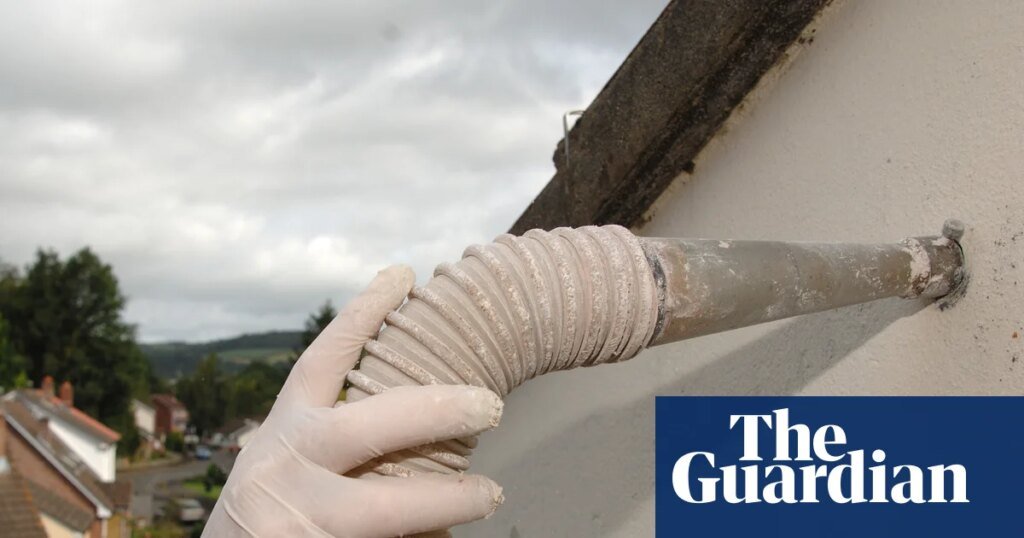
No homeowner wants to be faced with a hefty bill for household repairs – and when those charges are the result of botched insulation under a UK government-run scheme, individual misfortune turns to national scandal.
That has been the experience of tens of thousands of households after what MPs have condemned as the “catastrophic failure” of the energy company obligation (Eco) insulation programme run by the last Conservative government, the results of which have only recently been uncovered.
In the worst case, one household was faced with a £250,000 bill for fixing the damage caused by poor installation. Thousands more were hit with bills ranging from £250 to £18,000 to rectify work so poorly done that in some cases it posed a direct threat to health from mould and damp.
While the Serious Fraud Office is being urged to investigate, the government must now try to repair not just the damage to houses, but the reputation of a battered industry that is vital to efforts to reduce the cost of living and tackle the climate crisis.
This week, the government set out its long-awaited “warm homes plan”, a £15bn investment to help reduce bills and increase clean energy. It will fund solar panels, batteries and low-carbon heat pumps, as well as home insulation measures. Although hailed by ministers as the UK’s biggest public investment in home upgrades, the plan has been greeted with concern by some campaigners and experts, because of its perceived emphasis on generating low-carbon energy rather than saving it through insulation.
“Some of the wording in the plan seems to deprioritise insulation,” said Christopher Hammond, the chief executive of UK100, a group of local government leaders for climate action. “But we know it [insulation] works. We are worried about the emphasis.”
Of the £15bn, a third will go to upgrading homes for vulnerable people and those on low incomes. However, it is not known how much of that will be spent on insulation, compared with green energy.
The sector has already been shaken by years of “stop-start” policies. Insulation was championed by David Cameron in the early days of the coalition government, but the scrapping in 2015 of the loan schemes he set up caused a big drop-off of installations. For years, there was no government support, until Boris Johnson brought in a “green homes grant”. Six months later, that was scrapped, and MPs criticised the scheme for its delivery.
Labour’s move to scrap Eco, first rumoured last autumn, was another blow. Sarah Kostense-Winterton is the chair of the Energy Efficiency Infrastructure Group, which is made up of insulation providers and green groups. She said the sector had made about 7,000 roles redundant in the past three months, and the total jobs lost could reach 70,000 by the end of the year.
“[The sector] needs certainty and security now if any meaningful progress on tackling fuel poverty and driving down home heating bills is going to be made in this parliament,” she added.
Home insulation is one of the most effective ways of cutting energy bills, improving comfort and health, as well as reducing greenhouse gas emissions. Well-insulated homes are cheap to run – in the best, heating bills are minimal – and pleasant to live in, especially for older people, children and those with health problems, but installing insulation is easy to get wrong.
Anna Moore, the chief executive and founder of the retrofit company Domna, said insulation was often wrongly treated as a “simple fix”, but good installations required careful planning, especially for ventilation. Without good airflow around the home, insulation can trap moisture.
“The most common problems show up as damp, condensation and mould,” Moore said. “That usually happens because ventilation hasn’t been properly thought through, or because insulation has been badly fitted around edges, corners and openings.”
Even worse, it can be hard to tell whether the retrofit has worked. “These problems don’t always appear straight away. Homes can look fine at first, but over time residents experience poorer air quality and buildings begin to deteriorate,” Moore added.
Hammond said the best way to ensure quality was for local governments to work closely with local suppliers over the long term, building relationships and trust so that problems could be rectified and work of a high standard replicated across areas, potentially through “street by street” retrofit programmes.
As well as the £5bn in grants directed at vulnerable people and those on low incomes, the warm homes plan will support those better able to pay. For instance, loans and “innovative finance”, such as green mortgages, will offer a lower interest rate to homeowners who refurbish to low-carbon standards.
The government has not said how much of the £15bn will go towards insulation. Despite the misgivings of experts, the emphasis on solar panels, batteries and heat pumps may yield results faster than insulation alone.
Research published by the Department for Energy Security and Net Zero last autumn found that UK homes were not as draughty as had been previously thought, meaning that heat pumps – which run at lower temperatures than gas boilers – could be effective even without insulating first.
Also, solar panels have dropped rapidly in price to about £6,000 including installation for the average house, and are now available in forms such as DIY plug-in sets and balcony panels. A Whitehall source said the government wanted to “lean in” to what consumers wanted, rather than keep trying to push insulation on people first.
The alleged fraud, cowboy construction and mishandling of insulation under the previous government’s Eco scheme will be costly and time-consuming for the Labour administration to fix. The challenge now will be to ensure that heat pump and solar installations do not fall prey to the same mistakes.