

Stock image. Image: Green Finance Institute
The ‘Carbon Cashback’ initiative, developed by home energy efficiency platform Snugg, aims to help households build the financial case for investing in retrofitting.
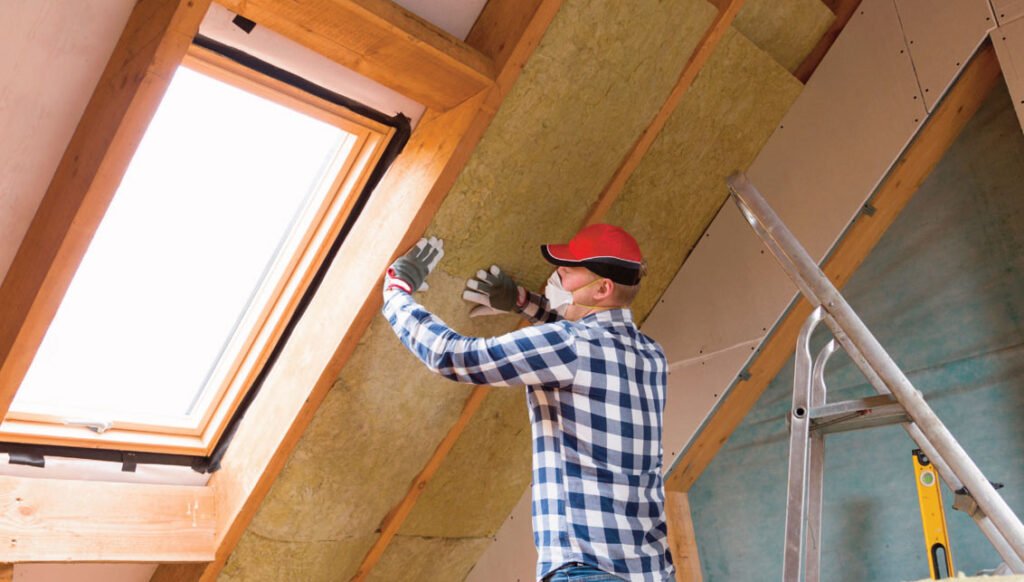
Homes participating in the initiative will use smart meters to track and validate carbon savings resulting from energy efficiency projects, such as installing insulation. Projects to transition homes away from fossil fuels, like switching oil or gas boilers for heat pumps and/or fitting home solar arrays, are also eligible.
The validated carbon savings will be converted into credits to be sold through the Voluntary Carbon Market. Verra will provide the validation framework, pending its approval.
Snugg has told homeowners to expect earnings of up to £2,000 over a ten-year period from carbon credit sales.
Only a small fraction of the credits on the Voluntary Carbon Market hail from projects in the built environment at present. Far more popular project types include forest conservation, restoration and creation; renewable electricity additions in low-income nations and clean cooking stoves in low-income nations. Nonetheless, some credits originating from retrofitted UK homes are already on the market; HACT and PNZ Carbon have been originating such credits since 2022.
Carbon Cashback is launching in beta to select partners today (24 March), with a wider launch planned later this year.
Snugg’s carbon markets lead George Wilson said: “Carbon Cashback represents an important step forward in incentivising home energy efficiency improvements by tackling the biggest barrier homeowners face – cost. By offering financial incentives, we believe this innovative approach will result in many more homeowners upgrading their homes.”
A 2024 survey carried out by the HomeOwners Alliance revealed that one-third of homes have been held back from making energy efficiency upgrades due to upfront costs.
The UK Government’s Department for Energy Security and Net-Zero (DESNZ) funded the development of the Carbon Cashback platform through its Green Home Finance Accelerator programme.
This programme is designed to stimulate the creation of innovative financial products which help homes and businesses to build the case for investing in energy efficiency improvements, low-carbon heating and solar. It runs in tandem with broader policy packages providing grants and loans for heat pumps and energy efficiency improvements, such as the Boiler Upgrade Scheme and Warm Homes Plan.
Improving Voluntary Carbon Market data
In other news from the Voluntary Carbon Market, digital monitoring firm Hyphen Global has launched what it claims is the world’s first module to calculate direct greenhouse gas impacts from nature-based projects.
At present, most carbon credit developers use standardised emission factors and calculations to estimate emissions reductions or removals. These estimations are then often verified periodically using technologies like satellite imaging.
Hyphen Global’s new module, developed in partnership with nature-based solutions standard-setter Social Carbon, provides a framework for undertaking real-time, continuous measurements that quantify actual greenhouse gas removals or reductions.
The module’s developers claim that enhanced “timeliness, accuracy and transparency” can help to allay greenwashing concerns in the Voluntary Carbon Market. Project developers using the module could, therefore, expect to command a higher carbon price.
The module is open-source and available to all carbon projects and monitoring, reporting and verification providers. It covers carbon dioxide, methane and nitrous oxide emissions.
“This is our industry’s tipping point – we can now offer the market a verification system based on atmospheric measurements and hard data,” said Hyphen Global’s director of atmospheric monitoring services Maxx Dilley.
Related news: Voluntary Carbon Market players collaborate on major new open-source data initiative
Related feature: Are the carbon credits used by businesses finally becoming more robust?