
“The size of property wealth currently under ownership by overseas companies is eye-watering, doubling in a decade”
– Andrew Lloyd – Search Acumen
The volume of property in England and Wales held by overseas companies has almost doubled over the past 10 years, according to new analysis, even as the number of new titles entering the register continues to fall.
Data shows a 92% increase in properties owned by overseas companies, rising from 47,787 in 2015 to 91,791 in 2025. Those assets are now valued at more than £125 bn, reflecting both long-term accumulation and sharp growth in values over recent years.
While ownership volumes have climbed over the decade, more recent trends point in a different direction. The total number of properties held by overseas companies in 2025 is 3,834 lower than in 2022, indicating a sustained slowdown in new acquisitions.
The value picture tells a contrasting story. Property assets held by overseas companies have reached an all-time high, increasing by 40% over the past three years alone, equivalent to £38.5 bn. Overall values have risen 44% since 2022, even as transaction volumes declined.
Analysis by legaltech provider Search Acumen highlights how growth has been uneven over time. The largest annual increase in overseas-owned titles came in 2017, when 6,955 properties were added to the register. A year later, 2018 recorded the highest value of newly registered overseas-owned property, totalling £16.2 bn.
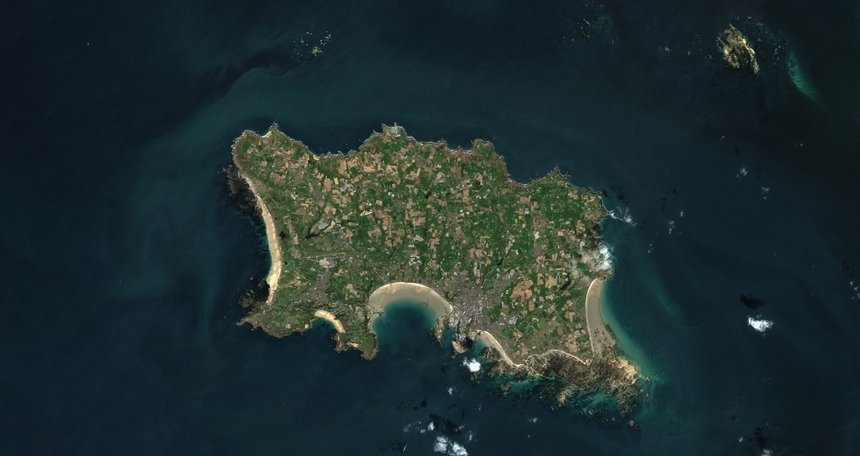
Jersey (pictured) has now overtaken the British Virgin Islands as the leading jurisdiction for holding UK property wealth through overseas companies. Assets registered to Jersey-based entities are valued at £57 bn, representing around 25% of all property owned by overseas companies. The British Virgin Islands follow with 21%, ahead of Guernsey at 13% and the Isle of Man at 11%.
Search Acumen’s research draws on the rolling register of land in England and Wales owned by non-UK companies or corporate bodies, alongside a direct comparison between 2022 and 2025. Both cumulative and non-cumulative views show a clear decline in new titles entering the register.
In cumulative terms, 2024 saw 3,171 properties registered under overseas company ownership. That figure was 210 lower than the year before and 2,902 fewer than in 2019. The non-cumulative comparison shows a sharper contraction, with 3,834 fewer titles recorded in 2025 than three years earlier.
Despite this slowdown in activity, the overall value of overseas-owned property has continued to rise. The strongest annual increase by value came in 2021, when £16 bn of new assets were added in a single year, reinforcing the shift toward fewer but higher-value purchases.
“The size of property wealth currently under ownership by overseas companies is eye-watering, doubling in a decade,” said Andrew Lloyd, director at Search Acumen. “Whilst there are some gaps and inconsistencies in the data from its source through government records, it is widely indicative of wider investor trends and a system that can and does protect the world’s wealthiest.”
“However, it is telling that the number of properties purchased by overseas-based companies is falling, currently at a ten-year low. This tells us two things; that either investors and the wealthy are buying assets and storing capital outside the UK, which is a troubling sign that our global appeal may be in decline, or that our property transaction system is becoming more stringent, noting increased transparency measures and anti-money laundering regulation in recent years deterring illicit purchases.”
Lloyd suggested the reality likely combines both explanations. “The likely answer is a bit of both. We know that the UK’s exit from the EU had huge economic consequences, including on the property industry. New taxes and rules for overseas investment have played a critical role in the decline since 2022, seen as a less attractive place post-Brexit, whilst in turn opening up opportunities for more domestic businesses.”
He added, “We also saw in August 2022 the Register of Overseas Entities newly require overseas entities owning UK property to declare who their beneficial owners are, which included non-UK companies. This move indicated to the wider market a tighter grip on compliance by the government.”
“Whilst reducing anonymity has to be a good thing, it may have, in turn, deterred some investors. This, combined with rising interest rates, higher borrowing costs, falling yields and slow capital growth, has likely made speculative investment less rewarding.”