
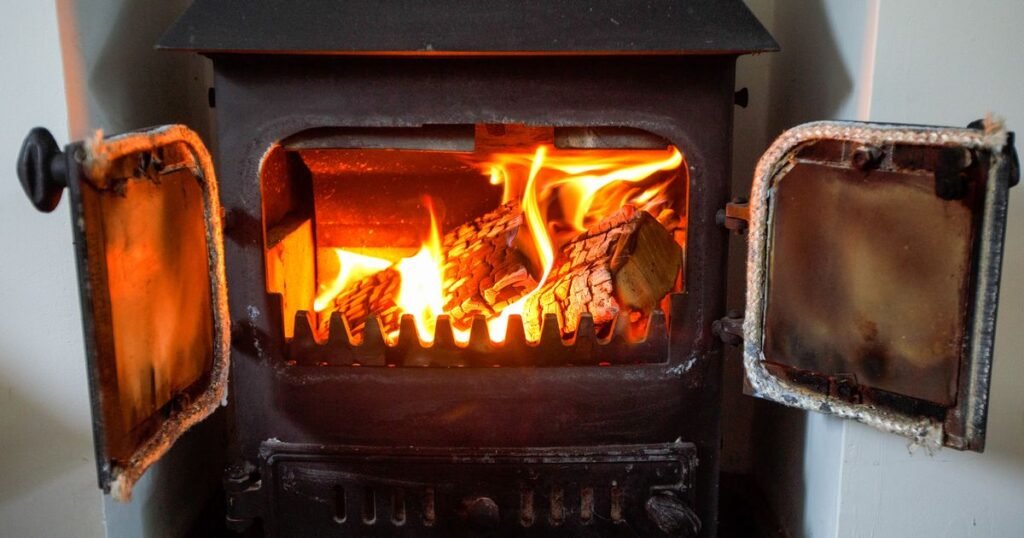
A new report has outlined the many issues that come with using wood burner fireplaces and log burners and is urging the government to take action.
A new report suggests that banning solid fuel fires such as log burners in UK homes could prevent up to 1,500 deaths each year and save the NHS an estimated £54 million.
Environmental consultancy firm Ricardo is calling for tougher rules on the use of solid-fuel appliances at home, arguing that emissions from wood burners and open fireplaces are linked to serious health conditions including heart disease, lung illnesses, strokes and certain cancers.
The report also found that domestic burning is connected to thousands of asthma and diabetes cases each year, harming people’s quality of life and putting additional pressure on NHS services. Commissioned by Global Action Plan and Hertfordshire County Council, the study looked at the health impacts of domestic burning across the UK.
The report found that domestic burning is one of the largest sources of fine particulate matter air pollution in the UK, a type of indoor emission pollution linked to a range of health issues, the Express reports.
According to Ricardo, emissions from household burning are responsible for an estimated 3,741 new diabetes cases and 1,493 new asthma cases each year. These conditions not only impact individuals’ day-to-day wellbeing but also add significant pressure to NHS services.
To investigate the study compared two scenarios, fully enforcing current Smoke Control Area rules – including prohibiting certain solid fuels and stopping chimneys from emitting smoke – and encouraging households to voluntarily eliminate all “non-essential” domestic burning of solid fuels.
It found that stopping all non-essential domestic burning was estimated to save up to £54million in healthcare costs each year, as well as preventing £164million in wider productivity costs to the UK economy annually, providing benefits almost five times greater than could be achieved using existing Smoking Control Area legislation alone.
Speaking in the report, Guy Hitchcock, Air Quality Technical Director, stated: “Domestic burning releases fine pollution particles that can be absorbed through the lungs and bloodstream, leading to or exacerbating health issues including asthma, lung cancer, diabetes, and strokes – among others.
“This directly affects individuals in houses where burning takes place, but also neighbours and communities. From an economic perspective, these health issues cost the NHS millions every year and take up significant resource. Not only would reducing domestic burning improve public health, but it would reduce economic losses from time off work.”
While Director of Policy & Campaigns at Global Action Plan Larissa Lockwood, said: “We all need to stay warm this winter, and we also need to think about the health impacts of our heating choices. An open fire or wood burning stove is the most polluting way to heat a home – air pollution from wood burning stoves is cutting lives short, putting people in hospital, and contributing to serious health conditions for people across the UK.
“It’s an uncomfortable fact, but the health burden of wood burning on the British public is simply too big to ignore. Existing measures to curb wood burning emissions are not tackling the burning problem at hand.
“The UK Government must take action to ensure everyone can access cleaner, greener and more affordable heating – including ensuring homes are properly insulated – as well as strengthening powers to allow local authorities to tackle air pollution, and providing clear guidance for the public on the health harms of burning wood and other solid fuels in our homes.”
A Government spokesperson echoed this statement, saying: “Air pollution is a serious public health issue. As set out in our NHS 10-Year Plan, we are committed to reducing emissions from domestic burning to protect public health and local communities.
“Since 2018, £575 million has been provided to support local authorities improve air quality and we are working alongside them to cut emissions so that everyone’s exposure to air pollution is reduced.”
However, Calvin May, Head of Technical Services at HETAS – the non-profit representing solid fuel manufactures – pushed back against the calls for a ban. He said: “The Ricardo report recommendation, to reduce the use of solid fuel burners, is not realistic, practical advice. We need workable solutions, not blanket bans.
“With local authorities themselves noting low levels of public awareness, the priority must be education, awareness, and better implementation of existing rules. Government have said they do not intend to ban domestic burning, so we must strive to continue improving.
“It is vital that we consider the practical implications behind any attempts to continue improving the UK’s air quality.”