
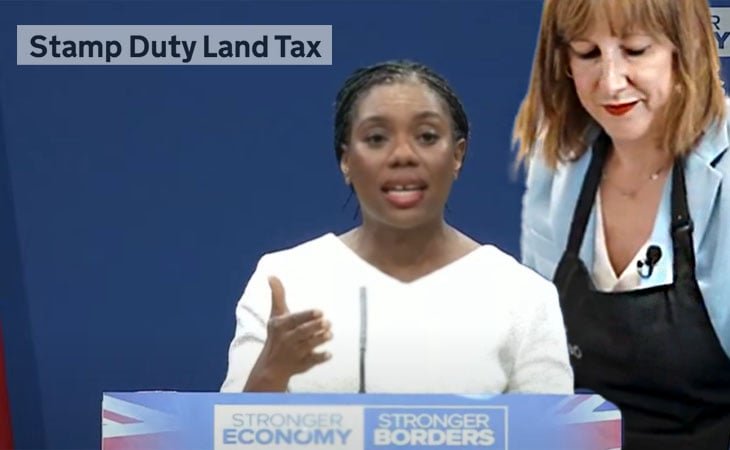

Kemi Badenoch’s closing speech at the Conservative Conference in Manchester this year ‘set the hares running’ by revealing a Tory government would abolish Stamp Duty Land Tax (SDLT) if she were to gain power at the next election. Hope springs eternal.
If Rachel Reeves steals her idea and did get rid of SDLT within the autumn Budget, depending on the nuances of any other fiscal changes, there could be a bonanza sale of residential properties in late November and December 2025.
The receipts from SDLT for residential sales are approximately £11.6 billion in 2025 and this will need to be replaced with some sort of Council/Mansion Tax and/or CGT (Capital Gains Tax) on personal, primary, residences, since the Chancellor doesn’t seem able to make any spending cutbacks without a back bench revolt of her MPs.
Already, transactions agreed are being held up until the full scope of the Budget is known, or if they are exchanged, the wording of the contract for sale would allow the buyer to re-set the terms to allow for any fiscal differences.
The point is that the months of November and December are notoriously quiet trading months for estate agents, which is why it is so difficult to get hold of them after mid-December as they are usually away in the Caribbean or skiing from their alpine retreats.
Very different
It is my prediction that this year could be very different, and buyers will flock to their agents, in their winter woolies, to buy as much as they can afford, to benefit from this new windfall. The sugar rush will be palpable!
The fun could be short lived when details are known about other wealth tax impositions, but these are medium to long term liabilities.
Elective tax
Stamp Duty was first introduced in 1694 and again during the early 1980s and through the 90s, the ‘slab sided levy’ went from zero to 2% above £35,000.
In 2014, the feckless Tory Chancellor George Osborne presided over a major shift in the SDLT protocol from the ‘slab sided’ method of property taxation to a ‘slicing’ structure, which remains today.
The levels rise proportionally to value and go up to an eyewatering 12% with a further turn of the thumbscrew of 3%, if you are unfortunate to own other properties. If you are from abroad, there is a further surcharge, which hits you like a brick at speed!
You could, therefore, say that Stamp Duty is a very significant ‘elective’ tax, particularly at the higher end, and its penal levels in the UK are one of the highest in the world.
Fiscal drag
Many economic commentators criticise SDLT as being the barrier which locks up capital, which would otherwise find its way to many other parts of the economy, stimulating additional growth, if the ‘SDLT dam’ were breached.
Property values, particularly at the higher end, have been held back by this fiscal drag, such that it has extinguished a lot of growth in values from 2015 to the present day.
By way of illustration, we sold a substantial property in Hampstead Garden Suburb, which was 10,000sqft with impressive indoor pool and leisure complex, in brand new condition, for £10.2million in 2006 and sold the same house in 2022 for a similar price and this is typical of some other properties.
Sword of Damocles
So, as the autumn Budget looms, like the ‘Sword of Damocles’, over the market, it may not all be bad news for the residential property market.
As they say in the classics, ‘as one door opens another closes on your fingers!’

Trevor Abrahmsohn is the founder of Glentree International